
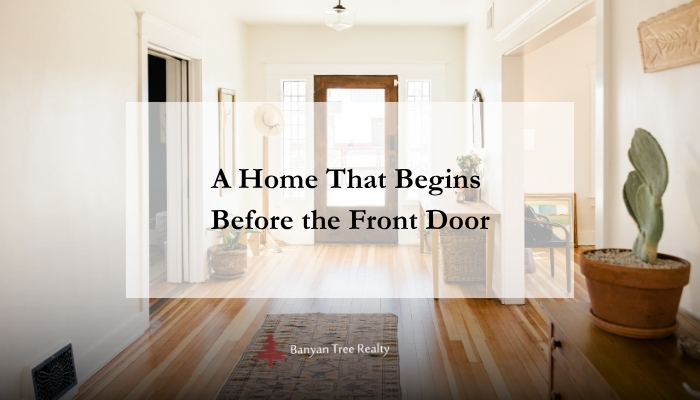
How arrival, streetscapes, greenery and surroundings shape the experience of coming home
When we think about what makes a home feel like home, we often begin at the front door. We think about the rooms within, the light that enters them, the way spaces are planned, and the many personal choices that eventually make them our own.
But the experience of home begins much earlier.
It begins on the way there.
There is a familiar shift that happens as we get closer to home. The surroundings become recognisable. The pace begins to change. The road, the trees, the landscape and even the spaces between buildings become part of a journey we make so often that we may barely notice it anymore.
And yet, we experience it every day.
This is why the quality of a residential environment cannot be understood by looking at the home alone. The approach to it, the streets around it, the greenery outside it and the larger neighbourhood all influence how it feels to live there.
A thoughtfully planned arrival, for instance, does more than create a good first impression. It creates a transition. After navigating the activity of the city, entering a more considered environment can subtly change the rhythm of the day. The experience of returning home becomes less about simply reaching a destination and more about gradually arriving somewhere that feels familiar.
The same is true of the streets within a neighbourhood. On a plan, they may appear to serve a purely functional purpose: connecting one place to another. In everyday life, however, they become much more.
They are where morning walks happen, where children cycle, where neighbours cross paths and where an evening stroll becomes part of a routine. Their scale, the greenery alongside them, the openness around them and the way they relate to the homes they connect can quietly shape the character of an entire neighbourhood.
Then there is nature.
Greenery is often discussed in residential development in terms of landscaping or aesthetics. But its influence on everyday living goes considerably deeper.
Trees soften the built environment and offer shade. Flowering plants introduce colour and seasonality. Open green areas create visual relief. Together, they bring something to a neighbourhood that architecture alone cannot: the sense that the environment is alive and constantly changing.
More importantly, nature grows with the people around it.
A young tree becomes a mature canopy. A flowering corner looks different from one season to another. A particular stretch of landscape becomes familiar enough to be associated with morning walks, conversations, childhood games or quiet evenings.
Over time, these elements stop feeling like landscaping. They become part of the memory of living there.
There is similar value in the spaces that are deliberately left open.
In cities where space is increasingly at a premium, there is a tendency to measure value by how much can be accommodated within a given area. Yet good residential planning also understands the importance of what does not need to be filled.
Open space gives the built environment room to breathe. It creates distance, perspective and a greater sense of ease. More importantly, it creates possibilities that do not need to be programmed in advance.
A child finds somewhere to play. Someone chooses to walk instead of staying indoors. A neighbour stops for a conversation. A quiet corner becomes a favourite place to spend a few minutes at the end of the day.
Individually, these may seem like ordinary moments. Collectively, they are what turn a residential development into a place where life actually happens.
This also changes the way we think about the boundaries of a home.
Legally, those boundaries may be very clear. Emotionally, they are far less so.
The tree outside the window becomes part of the view from home. The street outside becomes part of the evening routine. The landscape becomes part of the seasons one experiences. The neighbourhood becomes part of children’s memories of growing up.
The surroundings gradually become an extension of the home itself.
And perhaps this is where thoughtful residential planning matters most. It asks us to look beyond individual plots, buildings or homes and consider the relationship between all of them. It considers what someone will see when they step outside, what they will experience while walking through the neighbourhood, and how the environment might feel not only when it is new, but years later.
Because places, like people, mature.
Trees grow. Landscapes become fuller. Communities take shape. Familiar routes develop their own associations. Spaces that once existed as lines on a plan begin to accumulate stories.
At Banyan Tree Realty, this broader idea of living informs the way we think about residential environments. A home is important, but so is the world immediately around it — the landscape, the openness, the streetscape and the everyday experiences these elements make possible.
Because creating a meaningful place to live is not simply about what happens within four walls.
It is about creating an environment people look forward to returning to.
And when that happens, home begins long before the front door.